








Even though there have been over 100,000 gay weddings since the Supreme Court legalized same-sex marriage last year, these ceremonies are still relatively rare events for most clergy. Only 11 percent of Protestant senior pastors are being asked to perform such ceremonies, according to a survey by Lifeway Research. As might be expected, more liberal, […]
Catholicism is experiencing something of a renewal in Great Britain, ranging from the Catholic vitality of the Anglo-Indians to a “new sense of purpose and mission, and indeed of vocation…among the ‘creative minority’ of Mass-going adults,” writes Stephen Bullivant in the London-based Catholic Herald (August 11). Bullivant reports on the opening of “new cathedrals, new […]
From a lone pastor offering “drop-in” nuptials in 2008, these unscheduled types of services for weddings and baptisms have proliferated in the Church of Sweden today, possibly making new connections between parishes and inactive members, reports The Christian Century (August 3). When Pastor Jerker Alsterlund first perform unscheduled weddings at his church in the city […]
The growth and dynamism of Pentecostalism in Australia is attracting attention, especially in the Sydney area and New South Wales writes Paul Oslington, a professor of economics who is himself an Anglican but teaches at Alphacrucis College, the national college of the Australian Pentecostal movement, for the Australian Broadcasting Company (August 26). Sydney is home […]
Islamic-oriented humanitarian NGOs have flourished in Turkey in recent years, but their “parallelism” to the foreign policy implementation process of the current Turkish (AKP) government potentially makes their status ambiguous as non-governmental entities. This ambiguity also places them at risk in relation to changing perceptions of Turkey in areas where they operate, write Nihat Çelik […]
While the strong significance of and veneration for its current leader, Daisaku Ikeda (b. 1928), is obvious to anybody reading Soka Gakkai publications, the lay Buddhist movement does not intend to transfer this status to a successor, writes Ulrich Dehn (University of Hamburg, Germany) in an overview of the movement published in the journal Materialdienst […]
The Research on Religion podcast, sponsored by Baylor’s Institute for Studies of Religion, recently marked its 300th episode. The podcast, founded in 2010 and hosted by Anthony Gill, a political science professor at the University of Washington, draws about 5,000 listeners to its interviews with both religion scholars and practitioners. The podcasts, which are geared […]
º The Robloxian Christians (TRC) is unique for being both a virtual church drawing young people from around the world and for being founded by a teenager. Daniel Herron, 16, of Tacoma, Washington, started the church completely on his own, which is now “attended” by more than 4,500 members who gather at the virtual congregation […]
Revivals are an integral part of evangelical and charismatic Christianity, but the idea of what makes for revival is undergoing strain as evangelicalism grows more diverse and has less of a public presence in American society. In the Washington Post (July 13), Michelle Bornstein reports on one of the largest modern day revival events, Together, which gathered thousands of evangelicals at the Washington Monument and had “heavy social media branding, major music from hip-hop to folktronica to hard rock, and popular evangelists who know to keep their messages TED-talk short.” The event was the brainchild of 34-year-old evangelist Nick Hall, who wanted to bring together evangelicals in a public venue, just as Billy Graham crusades had done in the past. But today such a gathering had to deal with contemporary quandaries, such as how it would reflect evangelicals’ ethnic and theological diversity and the growing leadership role of evangelical women; whether Catholics, even such a prominent one as Pope Francis, should participate (the pontiff spoke to the crowd via a video connection); and, more pertinently, whether this public presence of evangelicals would advance evangelism or Christian influence. Bornstein reports that about half of the speakers for Together are non-white and one-third are women.
Bornstein cites church growth specialist Ed Stetzer as saying that Together is not like the Graham crusades in that the latter emphasizes its mission to convert non-Christians while the Washington event appealed to Christians for the need to be “reenergized and refocused.” The ways in which revival can mean different things to different Christians and has become decentralized is evident in the July issue of Charisma magazine, which is devoted to reports on recent outbreaks of revival in the U.S. and Latin America. 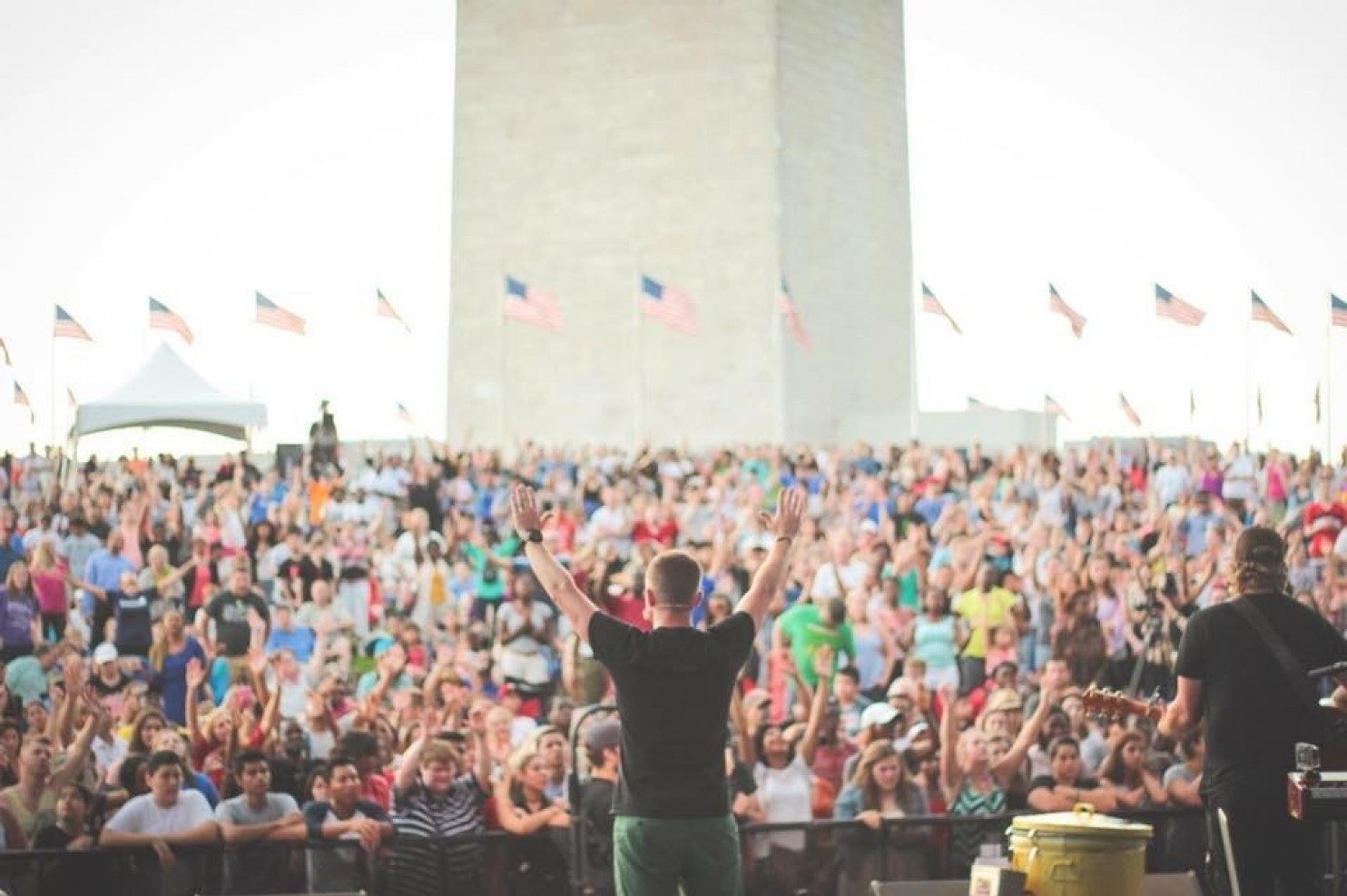
Behind the generic label of nonreligion, one finds a variety of views and “multiple secularities,” suggesting that the religious nones are not a coherent group, according to researchers speaking at the conference “Approaching Nonreligion” that took place at the University of Zurich, Switzerland, from July 7–9, which RW attended. Due to the rise of unaffiliated […]