








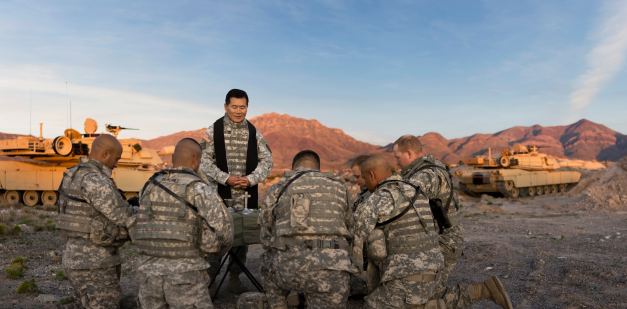
If the U.S. military with its reorientation under the leadership of Secretary of War Pete Hegseth has shown a strong interest in religion, it appears that the feeling is mutual, with the religious devotion of members of the military outpacing that of the population as a whole. Hegseth’s drive to revive traditional religious faith and spiritual leadership in the military can be seen in a December 16 video statement he made, arguing that the chaplain’s corps has been “degraded” by the “war on warriors,” political correctness, and secular humanism. He cited the Army Spiritual Fitness Guide as a sign of such secularization, noting that it only mentions God once, while making numerous references to feelings, consciousness, and even “playfulness,” stressing therapy and self-care. Hegseth said his department will replace that guide with a streamlined document that will emphasize the “chaplain as pastor,” and putting faith and spiritual well-being on the same level as mental and physical health. There may well be a demand for the supply of chaplains that Hegseth and his department are trying to put on the menu. In his newsletter Graphs About Religion (December 1), Ryan Burge looks at data from the Cooperative Election Study and finds something of a revival among those in active military service.
Burge notes that there has been a dramatic decline of active service members in comparing the baby boomer to the millennial generations. Those who have had a connection to the military in these surveys are not very different from the general population on religion; about two-thirds were Protestant or Catholic, and about 30 percent were nonreligious. That means around 7 percent belonged to another religious tradition. Burge then focuses on the active-duty military now, comparing samples from the first three years the religious affiliation question was asked (2010–2012) to the three most recent surveys (2022–2024). He finds that the share of active-duty Christians has dropped significantly—from 58 percent in the early surveys to 50 percent in the most recent ones. Still, compared to 18–45-year-olds who are not actively serving, the military respondents are more likely to be Christian. Military members are also significantly less likely to be nonreligious: 32 percent, vs. 48 percent among everyone else.
But when looking at the attendance rates of active-duty military, Burge was surprised to find that the share of military members who attended religious services had grown from 36 percent in 2010–2012 to 45 percent in the most recent data. “That’s insanely high, honestly. A member of the military is about twice as likely as a civilian to be a weekly church attender. And remember: we’re comparing only 18–45-year-olds in both samples here,” Burge writes. On the question about religious importance, there is a similar increase—from 39 percent of active-duty members in the earlier surveys to 44 percent today. “That shift is even more striking when compared to the rest of the sample: in the general public, religious importance dropped by seven points,” he adds. Burge concludes that there is not a revival occurring in military ranks but rather that new recruits are coming from more religious backgrounds and regions. “It’s not that the military is making its men and women more inclined toward a faith community—they were already that way before they swore the oath.”