







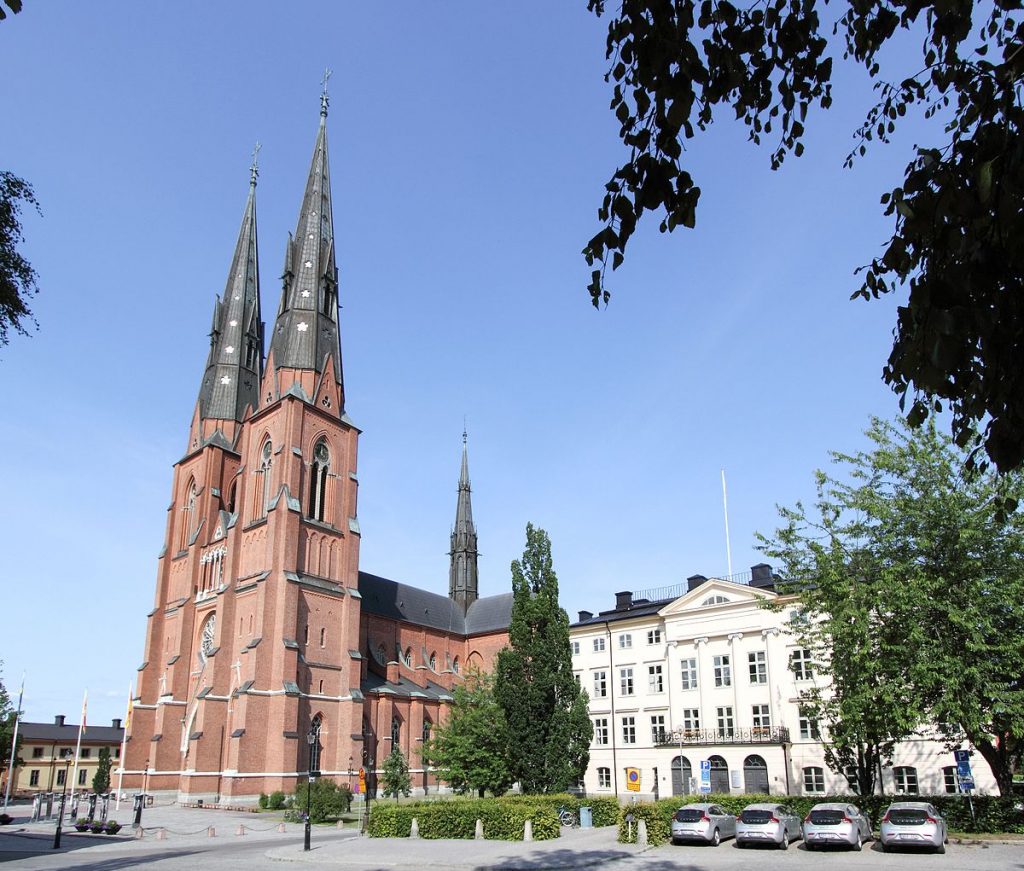
Secularism appears to be losing ground in Sweden, though like other countries, it is too soon to say that religion is overshadowing non-belief, writes Joel Halldorf in the online newsletter of the Christian journal Comment (January 8). Sweden has been viewed as the model secular society, registering church attendance figures under 5 percent. In cultural terms, religion was widely believed by Swedes to be an outmoded thought system pushed aside by a scientific worldview. However, that easy secularism is what is being challenged and viewed as old fashioned in Sweden today, according to Halldorf. He marshals anecdotal evidence for this emerging post-secularism—from pastors reporting that youth are now showing up at services, to every major Swedish newspaper now having a theologian among their columnists (something unthought of a decade ago), to conversations about spirituality making their way even into “secular, intellectual dinner tables that once kept religion firmly at arm’s length.” One factor in the declining status of secularism is the growing religious diversity of Swedish society. The surge of migration into Sweden has “brought a growing presence of Muslims, Eastern Orthodox Christians, Catholics, and Pentecostals, which further unsettled Sweden’s secular self-image. New layers of religious diversity were added to a society long accustomed to viewing itself as uniformly secular,” Halldorf writes.
The pandemic may also have been an accelerant of this trend, for which there is now more than anecdotal evidence. Halldorf cites the annual Youth Barometer, which surveys 15,000 people from ages 15 to 24 and found a growing interest in religion and spirituality in this group, even naming Jesus “Influencer of the Year” for 2025. During the same year, the Church of Sweden released its annual statistics, “showing a modest but noteworthy rise in confirmations—the first uptick in this kind of statistic at least since the 1970s.” Between 2005 and 2010, 5,000–6,000 people applied for membership in the Church of Sweden annually. In the early 2020s, that number grew to over 10,000. In 2024, 14,000 new members joined—the most in decades. The 2025 figures exceed even that; by November, nearly 18,000 had joined. Also in 2025, the SOM Institute, which runs Sweden’s most comprehensive study of social values, published a report showing that the share of young Swedes who attend services throughout the year doubled between 2020 and 2024, from 17 to 34 percent, the highest attendance rate in two decades. Belief in God in this age group also climbed, from 20 to 34 percent, reaching its highest level since the data were first collected in 2010. Attributing this trend to migration doesn’t account for the fact that both immigrants and non-immigrants have followed the same trajectory.
(Comment, https://comment.org/not-so-secular-sweden/)