







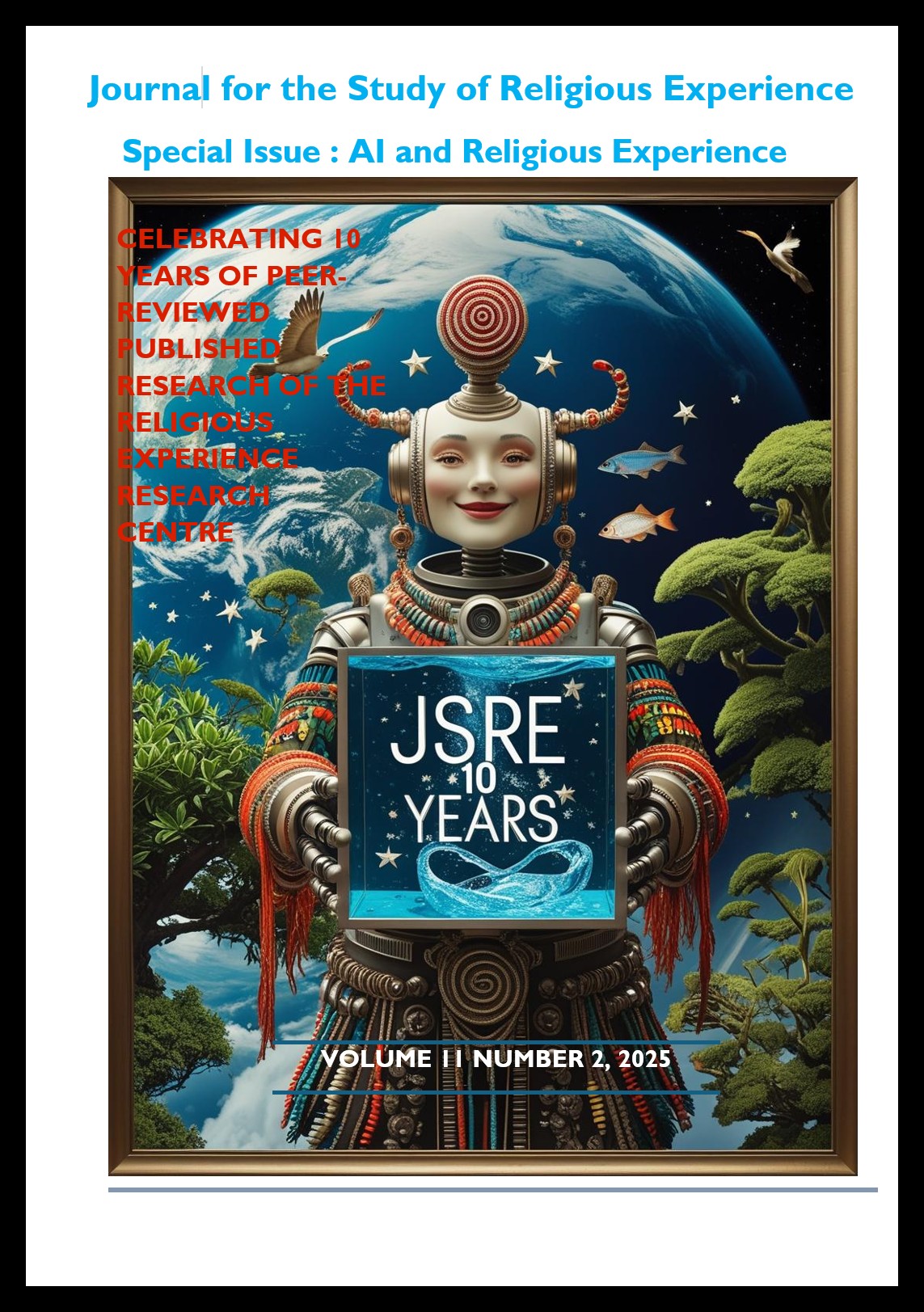
The current issue of the Journal for the Study of Religious Experience (Vol. 11, No. 2), marking its 10th anniversary issue, is devoted to recent research on AI and religion. The introduction notes that AI has impacted religious practice and devotion, not to mention religious imagery, to a similar degree to its influence in other spheres of society. The editorial adds that this impact “is exemplified in the ‘use’ of and research on the reception of authoritative and respected religious figures for chatbot purposes. Two such examples include Watermelon, a Dutch company which developed and enabled a digital Jesus, JesusPT, for individuals to chat with via WhatsApp (launched in April 2023, with a global coverage, using a GPT-4 version at the time). More recently, the company launched the same possibility creating a virtual Pope Francis to whom one can direct questions and get answers back in real time (2025). As digital avatars adopt the likeness and voices of revered figures, they challenge traditional notions of mediation and embodiment in religious practice.” The issue features articles on the chatbot phenomenon, a study of AI’s role in religion, spirituality and psycho-spiritual healing, and an analysis of how this techno religion relates to the debates about secularization and the disenchantment of the world. Rizwan Virk of Arizona State University argues that AI concepts such as virtual reality and simulation (the idea that that this world is not the final reality) are serving as “metaphors” for the spiritual life and that “it might help to bolster those who are wavering or likely to dismiss religion altogether to take some of these spiritual concepts more seriously, hinting even for scientists and atheists that it is possible there is something beyond the physical world.” This issue can be downloaded at: https://rerc-journal.tsd.ac.uk/index.php/religiousexp
Magnus Lundberg
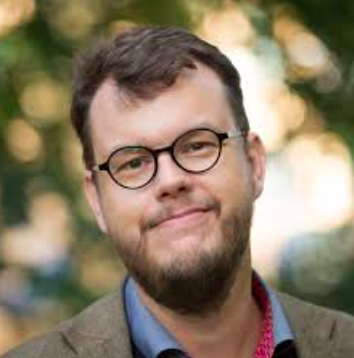
The prominent role of the pope in the Roman Catholic Church has raised major issues for traditionalist Catholics, whose principles should lead them to be the most fervent supporters of the papal institution, but who are highly critical of the post-Vatican II turn of Roman Catholicism. A small book by Magnus Lundberg (Uppsala University) offers a scholarly overview in English of how traditionalist Catholics have grappled with the question of papal legitimacy during the decades immediately after Vatican II. Is the Pope Catholic? Traditionalist Variations on a Theme (2026) centers on discussions from the mid-1960s to the early 1990s about whether John XXIII and Paul VI were antipopes. Lundberg mentions that “some people believe that the real break from traditional Catholic doctrine only came with Francis’s pontificate,” but those later developments follow similar arguments and are not discussed in the volume. The book’s central contribution lies in its typology of traditionalist positions, ranging from the relatively moderate to the radically schismatic.
Despite harsh rhetoric, Archbishop Marcel Lefebvre (founder of the Society of St. Pius X) never explicitly declared the Holy See vacant. This ambiguity created space for more radical positions, including various sedevacantist theories holding that all post-Pius XII popes have been antipopes and the Holy See has been vacant since 1958. Conspiracy theories represent “a consistent feature of the traditionalist variations” studied by the author, providing alternative explanations for apparent papal heresies while potentially preserving papal legitimacy. Indeed, Lundberg’s concluding analysis situates these movements within a broader conspiracy theory culture, drawing on Michael Barkun’s framework of “systemic conspiracies.” He argues that traditionalists weaponize historically Catholic forms of anti-Masonry, antisemitism, and anti-communism against contemporary Catholicism itself. The book can be downloaded in PDF format from Lundberg’s website at the URL: https://magnuslundberg.net/2026/01/13/new-book-on-catholic-traditionalists-and-the-papacy/ (with the link at the end of the introduction to the book).