









The survey Next Mormons 2, conducted by Jana Riess and Benjamin Knoll, finds that among current LDS members the gender advantage in terms of women’s religiosity that was evident in 2016 has been largely erased. In Riess’s blog for Religion News Service, Flunking Sainthood (January 15), she notes that today’s LDS women look “more like LDS men than different from them in terms of their religiosity. This is a major shift, and a surprise to us as researchers.” In the 2016 Next Mormons study, the researchers found that on multiple measures of belief and behavior, women were on average 9 points more religious than men. Another unexpected change they found, given the growth of nonaffiliation among recent generations, was that younger members were sometimes significantly religious on several measures. Riess reasons that this makes sense because as more young adults leave the church, “it becomes that much more of a conscious commitment for those who want to stay.”
The survey shows generational continuity on outward measures of religiosity. Among Gen Zers in the U.S. who still identify as LDS, 68 percent say they’re in the pews attending church every week. This two-thirds figure is on par with the oldest members in the study. Younger members are also close to older generations on holding a temple recommend and serving on missions (with millennials holding the lead on this measure). Yet on other measures, there is clearer generational decline: only one in five Gen Zers do daily scripture readings, and daily prayer is down for every generation except the oldest. This was also the case for attending sacrament meetings, with only 31 percent of Gen Zers holding to this observance. Members of Generation Z also were less certain of their beliefs about the church (showing a nearly 30-percent drop compared to boomers and Silent generation members), and they showed lower rates of tithing (26 percent compared with 55 percent of boomers/Silent generation Mormons). In other words, these younger members seem to be picking and choosing when it comes to central matters of the faith, Riess concludes.
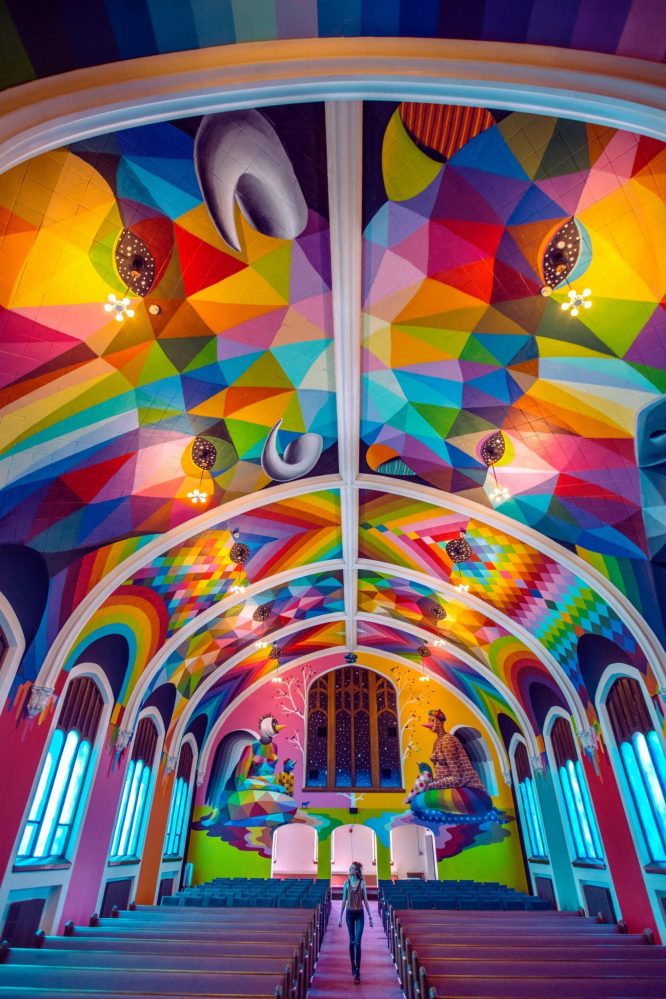
The optimistic, almost glowing, accounts of the effects of psychedelic drug use on religious belief have been exaggerated, with psychedelic users more likely to be unaffiliated and to leave the religions they grew up in than non-users, according to a study by psychologists. In Lucid News (January 5), Don Lattin reports that the study, conducted by Swedish researcher Pehr Granqvist and Rabbi Aaron Cherniak, examined sociological data gathered over several decades from 22,000 people in the United Kingdom. Past studies of users of psychedelic drugs reported a high incidence of vivid spiritual experiences. Granqvist and Cherniak note that their finding of an association between people’s use of psychedelics and disaffiliation from their religion did not necessarily mean that “psychedelic-induced mystical experiences caused people to leave their religion,” Lattin writes. The same trend was found among other users of illicit drugs, suggesting that the lifestyle and personalities of drug users may be driving such disaffiliation. Psychedelic use did not predict real-time changes in religiosity or spirituality, according to the researchers. “A critical finding of the study is that psychedelic use does not consistently increase religiosity or spirituality,” Cherniak said. “This result challenges romanticized views that psychedelics inevitably lead to mystical insight or religious awakening.” When psychedelic users report insights such as “we are all One,” they may be drawing on their existing spiritual beliefs and may already be part of the “spiritual but not religious” culture that holds to such a universalistic view. According to Cherniak, “Psychedelics might gently reorient the compass of meaning, but they do not build or destroy temples. Their impact on spirituality is personal, evolving, and never guaranteed.”
(Lucid News, https://www.lucid.news/revealing-statistics-question-if-psychedelics-truly-impact-religious-beliefs/)
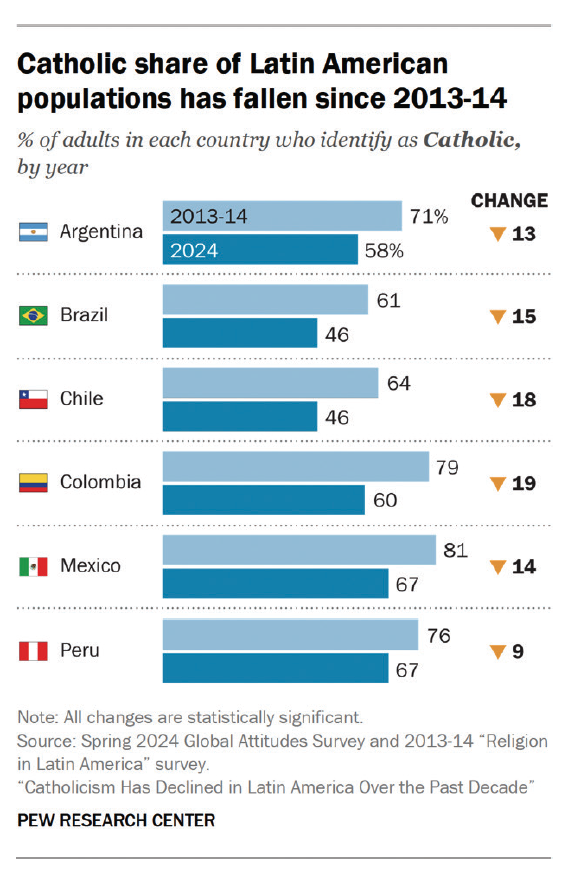
A recent Pew survey finds Catholicism continuing its downward slide in Latin America as the proportion of the unaffiliated increases. Conducted in 2024, the survey found the sharpest decline in Catholic adherence in Colombia, going from 79 percent in 2013– 14 to 60 percent in 2024. The smallest decrease was seen in Peru, with Catholic affiliation dropping from 76 percent to 67 percent over those 10 years. But religious unaffiliation nearly doubled or saw even larger gains, with the unaffiliated growing from 8 percent to 15 percent of the overall Latin American population. Unaffiliation rates were largest in Chile and Colombia, with one-third of Chileans identifying as religiously unaffiliated, doubling the percentage of those who said the same a decade ago. Colombia also saw a 17-point increase in the religiously unaffiliated.
While Protestantism stayed steady in all the surveyed countries, the share of Protestants who were Pentecostal dropped. In Argentina, where 16 percent of adults identified as Protestant in 2024, only 54 percent of Protestants said they were Pentecostal in the 2024 survey, compared with 71 percent a decade earlier. Pew cautioned that the sample sizes of Protestants were small, creating large margins of error in all countries. As for religious beliefs, they remained relatively high despite the rise of unaffiliation. In fact, the religiously unaffiliated in Latin America had similar rates of belief and even practice to the Christians of Europe. “For example, similar percentages (46 percent and 47 percent) of the religiously unaffiliated in Brazil and Colombia said they pray daily, making them more likely to do so than Christians in any European country surveyed in 2024.” the Pew report found.
(This report can be downloaded at: https://www.pewresearch.org/global/2026/01/21/catholicism-has-declined-in-latin-america-over-the-past-decade/)
The demographers add that “Globally, if current trends continue, by 2075, the world will be 36 percent Christian and 33 percent Muslim, pointing to a future in which Islam will eventually become the world’s largest religion.” While conversion patterns and missionary activity, which would impact the conversions from Islam to Christianity, are harder to predict, Zurlo and Johnson argue that “establishing positive relations between Christians and Muslims has perhaps never been as important as it is today.” Meanwhile, the fastest Christian change from 2025 to 2075 is projected to occur in Bangladesh, Iran, Algeria, The Gambia, Burkina Faso, and the Democratic Republic of the Congo. The projected growth of Christians in the latter country to 326 million by 2075 will make it a larger Christian country than the U.S.
(International Bulletin for Mission Research, https://journals.sagepub.com/home/ibm)

Sales of the Bible in Britain soared last year, totaling £6.3 million, a rise of 27.7 percent from the previous year and more than double the figure from 2020, according to the Christian publisher SPCK Group. The best-selling Bible translation in 2025 was the English Standard Version (ESV). The magazine Premier Christian News quotes Sam Richardson, CEO of SPCK Group, saying that the sales are “evidence of a significant cultural shift regarding matters of faith and religion in this country. As we face worldwide political and social change, including the after-effects of the Covid-19 pandemic, global wars, the rise of AI, and a growing mental health crisis, individuals are re-engaging with questions of meaning and spirituality.”