








Transcendental Meditation (TM) has become highly factionalized since the death of founder Maharishi Mahesh Yogi in 2008, with the familiar scenario of second-generation members chafing under original members seeking to maintain the purity of the movement’s teachings, writes Lane Atmore in the journal Communal Societies (No. 1, 2017). Atmore conducted 44 interviews with TM members […]
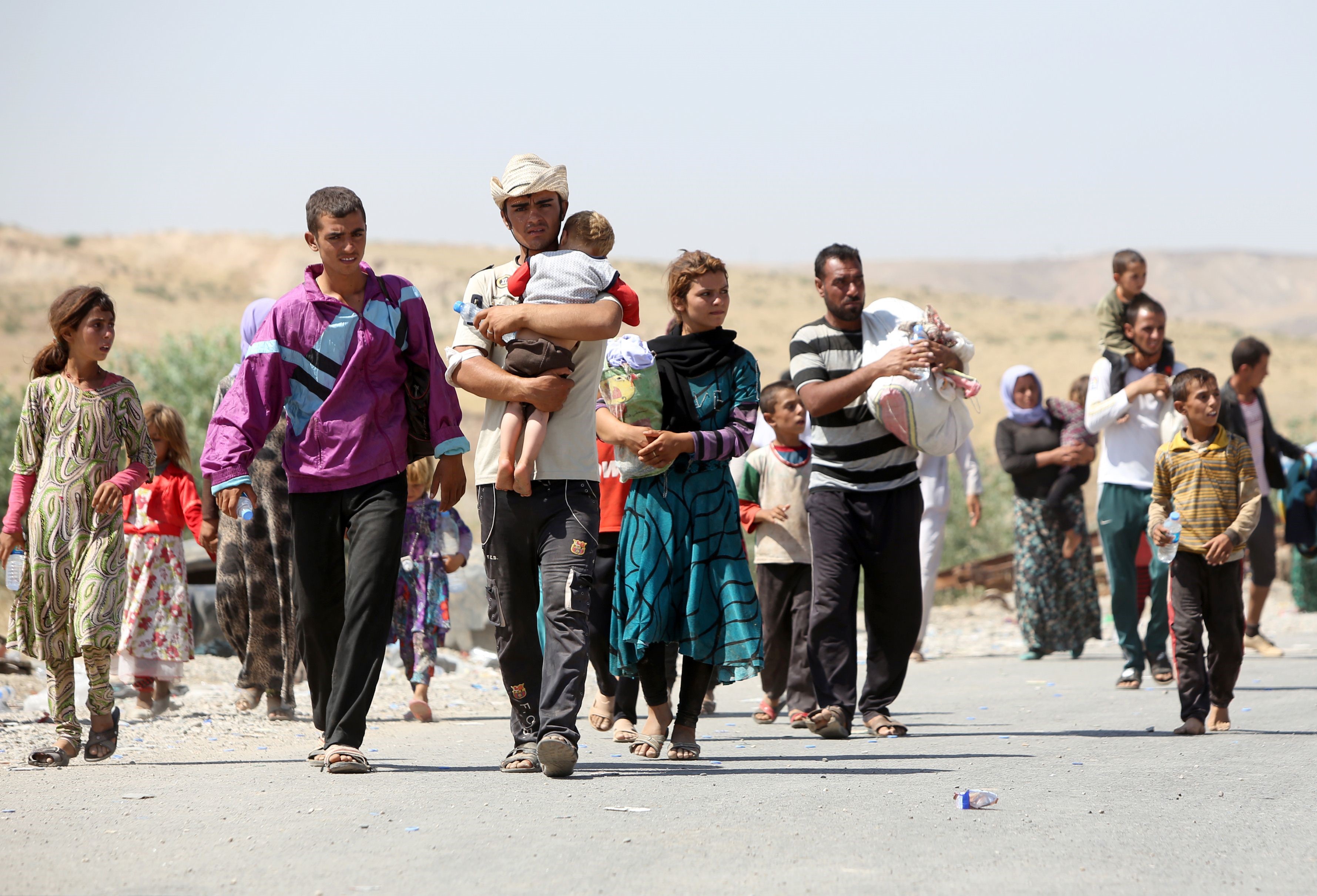
Christians and Yezidis who had suffered deeply under the Islamic State (IS) have celebrated the extremist regime’s recent expulsion from Mosul and the surrounding villages of the Nineveh Plain, with some of these refugees already moving back to their ancestral homeland. But religious and political differences are also returning to the region, with various religious leaders and groups lining up on opposing sides, reports The Tablet (August 12), a Catholic magazine in the UK. Plans about how to resettle these groups have been under debate almost since the IS pushed these religious minorities out of Mosul and the surrounding villages, most notably the proposal to establish an autonomous region for Christians and Yezidis [See June 2016 RW for more on this proposal]. The problem is that Iraqi Kurds, who were instrumental in routing the IS, also dispute claims to the region. The Christians distrust the Kurds, believing that they received little security from Kurdish troops after the Kurds disarmed them.
The Yezidis have fewer issues with the Kurds, but it is the strong political divisions among Christians, who have shrunk from two million to 400,000 today, that make them “easy prey for manipulation,” writes Filipe d’Avillez. Although the crisis in the region has brought the various churches closer together, they still have different takes on politics. The Assyrian Church of the East tends to favor autonomy, as do the Syriac Catholic and Orthodox churches. The leadership of the Chaldean Catholic Church has been more opposed to this idea, though it has recently softened its position. Avillez concludes that an autonomous region may be the only way for these religions to preserve themselves. But for this proposal to work, “church leaders and politicians, the people on the ground and the leaders in the diaspora, will have to achieve something that so far has always proved elusive: to pull in the same direction.”
(The Tablet, http://www.thetablet.co.uk/)
Faced with low oil prices and challenges to its influence, the Saudi Kingdom’s role as the custodian of the holy cities of Mecca and Medina is becoming more important, writes analyst Kamran Bokhari in Geopolitical Futures’ daily digest (Sept. 1). For a long time, the Saudi dynasty was aware of the importance of controlling the […]
Evangelicals are using new musical forms that go significantly beyond “traditional” contemporary Christian music (CCM) in both worship and outreach, but such experimentation may have unintended consequences for churches according to two reports. Christianity Today magazine (July–August) reports on the rise of electronic dance music (EDM) in evangelical churches that may be challenging the lyric-based […]
The critical attitude toward environmental controls and regulations and the withdrawal from the Paris accord on climate by the Trump administration appears to be driving up the environmental activism of American churches reports The Economist magazine (July 28). The Erasmus blog of the magazine reports that “green-minded congregations, and even those who have not hitherto […]
There are probably 3,000 Brazilian Protestant missionaries abroad, mostly Pentecostal, and 90 percent of them are sent by Brazilian missionary agencies, reported Paul Freston (Wilfrid Laurier University) at the conference of the International Society for the Sociology of Religion in Lausanne, Switzerland (July 4–7), which RW attended. One in five Brazilians today is Pentecostal. Like […]
While some ethical values of young adult Buddhists in the U.K. strongly correlate with broader youth culture—e.g. gender equality—other values do not cohere well, such as reluctance about high alcohol consumption, reported Sarah-Jane Page (Aston University) in her paper presented at the conference of the International Society for the Sociology of Religion in Lausanne (July […]
India may well be on its way to becoming a Hindu state, even as its secular constitution remains officially in force, writes Christophe Jaffrelot in the Journal of Democracy (July). In an article marking the 70th anniversary of democracy in India, the political scientist notes that much of this change toward favoring Hinduism and cracking […]
The large wave of new Muslim immigrants in Germany are showing themselves to be less religiously conservative than the pre-existing Muslim community as well as more concerned with integrating into mainstream German society, reports The Atlantic magazine (July 26). The more than one million refugees that have settled in Germany are from Muslim-majority countries and […]
The celebration of the slava feast throughout Serbia blends secular, familial, and religious elements, but the observance is also increasingly tied to the Serbian Orthodox Church and nationalism, writes Sabina Hadzibulic in the journal Temenos (53:1), the journal of the Finnish Society for the Study of Religion. Besides Christmas and Easter, slava is the most […]