








The new book Religion and the Social Sciences (Templeton Foundation Press, $24.47) brings together contributors to account for the place of religion in their respective disciplines—from criminology and family psychology to outliers like epidemiology and gerontology (although the latter discipline has dealt with religious topics for over a century). Editor Jeff Levin of Baylor University […]
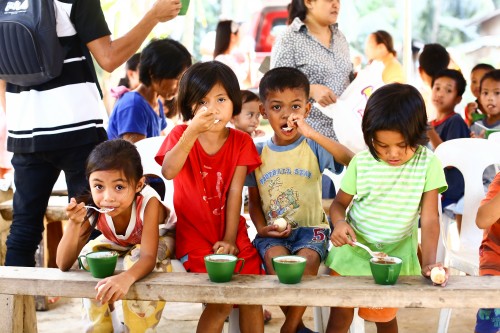
Community development ministries have expanded throughout the Christian (and non-Christian) world, but until recently there have been few attempts to find out how effective they are in lifting their clients out of poverty. Christianity Today magazine (July/August) reports that a body of research has developed in recent years that goes beyond drawing the usual correlations between community development, religious faith, and poverty relief that have existed since Max Weber’s study on the Protestant ethic to look at the causative factors in this relationship. Economists Lincoln Lau and Bruce Wydick write that a recent randomized controlled experiment involving 320 villages and 6,276 low-income families in the Philippines “appears to confirm that the Protestant ethic causes economic change.” Participants in the study were randomly selected for a curriculum teaching Christian values as well as health and wellness advice for four months. These families were then studied along with a control group for increases in their household income six months after finishing the curriculum program. Those who received the evangelical Protestant training showed a 9.2 percent increase in household income compared to the control group.
The evangelical group also showed changes in hygiene and “grit,” which may have been due to the value lessons. But other results were not as clear. “The workers who received religious training may have consumed more goods and had fewer family members going to bed hungry, but the results were not statistically significant,” Lau and Wydick write. One negative outcome of the study was that major arguments with relatives increased by 2.2 percent for those who received the values training. Despite the increase in household income, some participants also viewed themselves as poorer compared to the rest of the community than when they first started the program. Lau and Wydick also report on other recent studies on the causal relationship between Christian discipleship and economic development. A 2013 study of the faith-based program of Compassion International found that it increased secondary school completion by 40 percent and the probability of white-collar adult employment by 35 percent among formerly sponsored children.
The “Word of Wisdom,” which dictates diet regulations in Mormonism, is not followed strictly by most Latter-Day Saints, with only about half of church members saying they do so, according to a study in the independent Mormon journal Dialogue (Spring). The prohibition of such beverages as caffeinated soda and coffee has become a well-known feature […]
A large segment of those participating in deviant sexual subcultures, such as those involving sadism and masochism, report spiritual experiences from such involvement, even if they are hesitant and self-conscious about using religious or mystical language, according to sociologist Julie Fennell. In the journal Sociological Forum (online July), Fennell writes that the spiritual and “pagan” […]
Communities showing significant poverty and a lack of ethnic diversity may produce both more anti-Islamic sentiment and more extremist Muslim tendencies, according to a recent study in the journal Science Advances (June 6). Researchers Christopher A. Bail, Friedolin Merhout, and Peng Ding examine the relationship between anti-Muslim and pro-ISIS (Islamic State of Iraq and Syria) […]
While the Catholic World Youth Days with millions of participants have become a feature of contemporary Catholicism, religious youth events on a smaller scale also take place in other churches, for instance in Finland. Togetherness and shared rituals, more than a cohesion of beliefs, are central for young people attending a summer revivalist gathering there, […]
The use of academic experts showing little knowledge of or sensitivity for religious peculiarities is a key factor in the classification of a number of religious groups as “extremist organizations” in Russia (such as the Jehovah’s Witnesses in 2017), writes Dmitry Dubrovsky (Center for Independent Social Research, St. Petersburg) in Religion & Gesellschaft in Ost […]
Home schooling is on the rise in Russia, finding support from the Russian Orthodox Church and the government, at the same time that the practice is being restricted in much of Europe, writes Allan Carlson in the conservative ecumenical magazine Touchstone (July/August). Carlson reports that the Global Home Education Conference, attracting homeschoolers from 35 nations, […]
Along with their Orthodox counterparts, Russian evangelicals have shown growing support for Vladimir Putin, especially over what they see as the leader’s attempts to protect Middle Eastern Christians from religious persecution, writes Jayson Casper in Christianity Today magazine (July/August). When Russia intervened in the Syrian conflict, the action was applauded by Russian Christians—both Protestant and […]
The growth of technology within a sect of diasporic Tibetan Buddhists is one factor in growing defections among younger monks, according to Malwina Krajewska of Nicolaus Copernicus University in Poland. Krajewska, who was presenting a paper at the Toronto meeting of the International Sociological Association in mid-July, which RW attended, studied several Tibetan monasteries in […]