







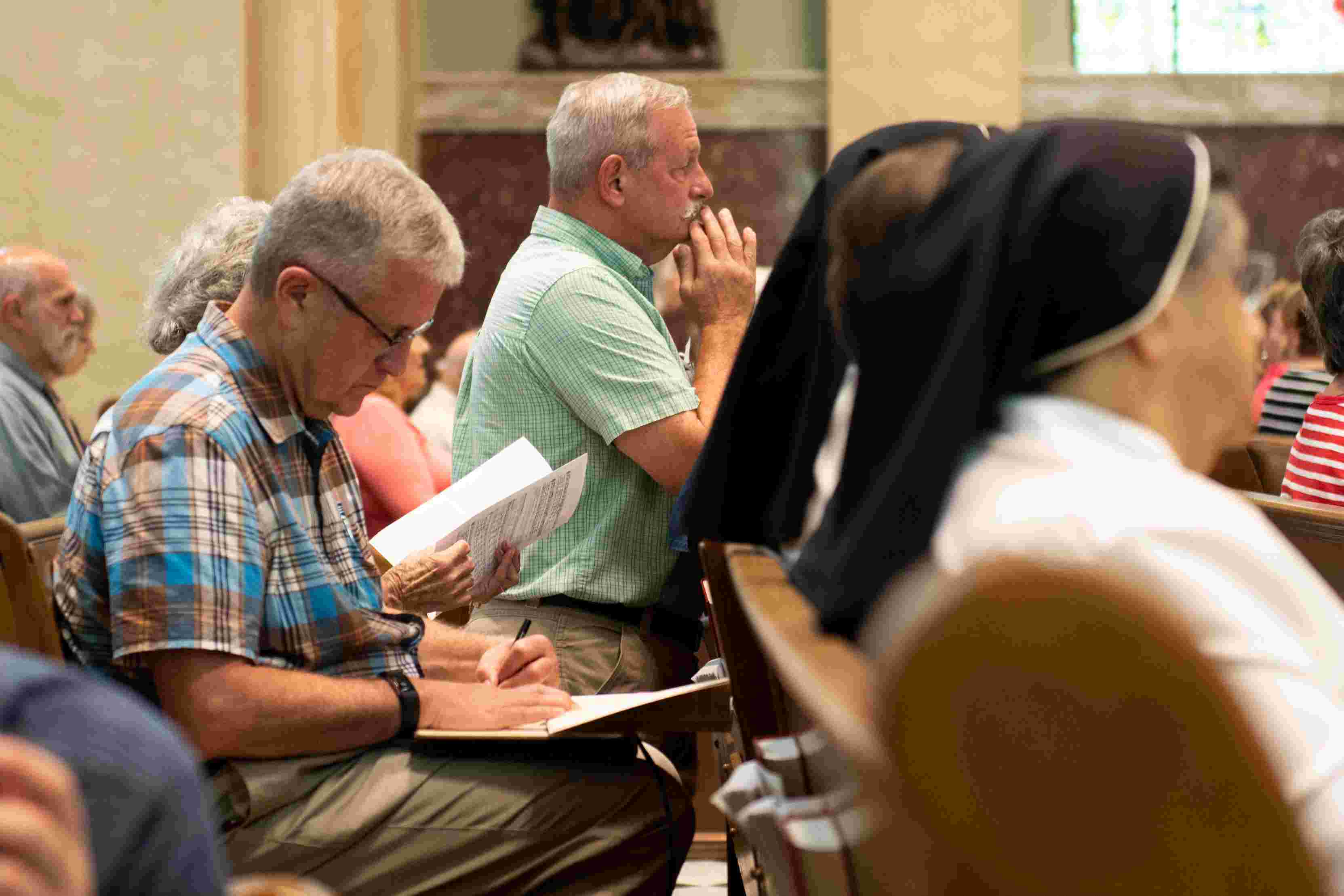
Charges and counter-charges of sexual abuse in the Catholic Church heated up considerably this summer, with allegations of abuse and coverup reaching to the top of the Church hierarchy, including Theodore McCarrick, the first-ever U.S. cardinal accused of sexual abuse to resign. While the hierarchy is the focus of this recent wave of abuse and collusion, much of the press coverage has looked at parish-level Catholics and how this might damage their relationship with the Church. It is certain that the material costs of the scandal though lawsuits will continue to impact—in some cases bankrupt—dioceses and in turn parish life (the lawsuits have targeted dioceses and religious orders rather than parishes, since individual churches have little authority over their priests). Much of the data on Catholics’ attitudes to abuse is still related to the parish-level sexual abuse by priests and coverup by local bishops that was revealed during the first wave of this scandal that broke in the early 2000s. Observers are now wondering if high-level involvement in the crisis might lead to greater disaffection from the Church. The Washington Post (August 19) notes that “[s]urveys have rarely asked about the Catholic Church’s response to the crisis since 2013, when a Washington Post-ABC News poll found that 78 percent of Catholics disapproved of the way the church had handled the scandal—more than a decade after a Boston Globe investigation prompted the church to overhaul its procedures for rooting out abusive priests.”
In the Post article, Julie Zauzmer, Michelle Boorstein, and Michael Brice-Saddler provide an anecdotal picture of reactions to the latest scandals—ranging “from those who can’t be shocked anymore to those who were newly grieved, from those who feel Catholics are unfairly singled out to those who maintain their faith in the religion but not its leaders.” Patricia McGuire, president of Trinity Washington University, saw this summer as sowing new doubts. “The fact that we thought all the worst had come out already—this is what creates cynicism. People were like, ‘Okay, it’s all cleaned up, now we’re moving on.’ … Now we know: The church is a fallible human organization.” Others cited the ongoing scandal’s impact on young people who already show high rates of disenchantment with religious and other institutions. In any event, it appears that the crisis is widely perceived as adding to the growing ranks of non-affiliated (or “none”) Catholics in the U.S. According to Pew research in 2015, about 27 percent of former Catholics who no longer identified with a religion cited clergy sexual abuse scandals as a reason for leaving the Church, while 21 percent of former Catholics identifying as Protestant did so. But National Public Radio (August 18) reports that it is still unclear how the crisis affects Catholic attachment and affiliation with the Church.
A new generation of Jewish children in the Bay Area are being raised in multiracial households, according to the Portrait of Bay Area Jewish Life and Communities study released last February, which means that congregations will have to become accustomed to Jews who are black or have other backgrounds not usually associated with Judaism, writes […]
The global growth of the Noahide movement, which consists of ex-Christians seeking to follow Jewish law and monotheism, has come to the attention of Jewish leaders who are trying to build support for world Zionism, but there are sharply differing views on how Jewish these new believers can be, writes Rachel Z. Feldman in the […]
The increase in the number of Catholics who claim an evangelical identity and experience, such as being born again, may have more to do with different educational trajectories among Catholics than the alliance between evangelicalism and Catholicism or immigration, according to sociologists Samuel L. Perry and Cyrus Schleifer. Writing in the Review of Religious Research […]
Uruguay is slowly becoming more accommodating to the expression of religion in the public sphere after years of strict separation between the state and public religious expression, according to a new study by Nestor Da Costa in the journal Social Compass (online in August). secularism was traditionally close to the French laïcité model of church-state […]
Abortion has become a contentious political issue in the Latin American countries of Argentina, Chile, and Brazil, even though more as a subject of debate than a change in policy. Writing on the news site Vox (August 9), Amy Erica Smith argues that the new attention to abortion is less a sign of secularization in […]
Buddhist scouting is the most recent addition to scouting organizations in France, where they were helped by French Muslim scouts in launching their organization, reports the French newsletter LaïCités (August). Alongside French Catholic scouts (of various shades), Protestant scouts and secular scouts, they are part of a lively and growing interest in scouting in France, […]
Christian activity directed at North Korea is continuing despite sanctions and travel bans, even if such efforts are changing their focus from evangelism to social service, according to political scientist Joseph Yee. In a paper presented at the Association for the Sociology of Religion, the researcher reported that from 1985 to 2012 there were 480 […]
Examining the paradox of a country where book-vending machines sell Korean versions of the Talmud and documentaries on Judaism are broadcast on television, at the same time that the Anti-Defamation League (ADL) has found South Korea to be one of the most anti-Semitic countries in the world although there are not more than 100 Jewish […]
“Since the beginning of the 2000s, a kind of home schooling providing children with Christian education has emerged in the big cities [of China], such as Beijing, Shanghai and Guangzhou,” writes Xiaoming Sheng (University of Cambridge) in an article published in the British Journal of Religious Education (online in June). The scarcity of research on […]