







The report Islam as Statecraft from the Brookings Institution looks closer at the “geopolitics of religious soft power” used by Islamic countries in their foreign policy. Authors Peter Mandaville and Shadi Hamid write that “soft power,” which means the use of cultural outreach, including religion, in foreign relations and policy, is not confined to Islamic […]
Far from shying away from politics, American Muslims have been compelled onto the political stage by the new pressures and conflicts surrounding Islam in the Trump era, though the shape and outcome of such involvement remain unclear. In a presentation at the late-October meeting of the Society for the Scientific Study of Religion, which RW attended, Brie Laskota of the University of California noted a “Trump effect” reflected in Muslims running for political office. Policies such as the travel ban targeting Muslim nations and the more general anti-Islamic rhetoric have led American Muslims in three directions: to feel overwhelmed, to keep their heads down and ignore such challenges, or to engage more deeply in civic life. The spate of Muslim candidates running for local and national offices suggests that the third option is being embraced in much of the Islamic community. Laskota said that 90 Muslims ran for office in the last year, with 49 remaining as post-primary candidates. As RW goes to press following the midterm elections, two Muslim women have been elected to Congress for the first time—Minnesota’s Ilhan Omar and Michigan’s Rashida Tlaib.
Laskota said that the stage had been set for such political activity 20 years earlier through such networks as the American Muslim Civic Leadership Institute, the Council on American Islamic Affairs (CAIR), and secular efforts as the New Leaders Project. The new Muslim politicians share an alienation from what they regard as Republican extremism, with the main division being between centrist and leftist progressives. Among the Muslim community in general, “voting is seen as obligatory, much more than usual, [although] if there are no returns [from such political involvement] the Muslim community may become more isolationist,” Laskota concluded. An article in the journal Politics and Religion (online October) echoes Laskota’s research in showing how Muslims have responded to spikes in anti-Muslim discrimination since 2016 by mobilizing in interest groups on issues such as Islamophobia and citizenship rights. Targeting Muslims as “the other” in American society has “provided Muslim American interest groups with a number of unintended opportunities through which they have been able to present themselves as official representatives of the American Muslim community,” writes Emily Cury of Northeastern University. 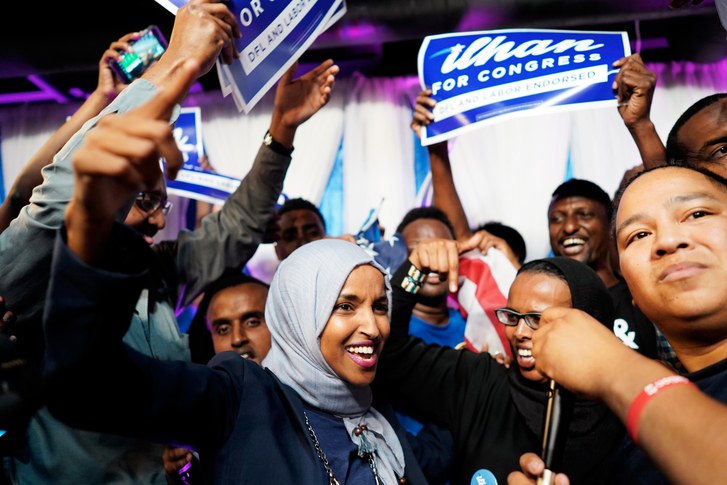
Women in Eastern Orthodoxy are making slow but steady gains in church leadership, thanks to their involvement on the Internet and social media, although this development is uneven across Orthodox churches worldwide and still not receiving an official stamp of approval. That was the conclusion of scholars, women religious, and activists at an October conference […]
“Tentmaking” ministries that bring social entrepreneurship into congregational life are finding a growing reception among a wide range of denominations and churches, as they popularize the idea that business is a spiritual calling and signal a shift away from worship as the main function of churches, according to Thad Austin of Indiana University. Austin, who […]
The Internal Revenue Service’s (IRS) attempt to monitor and penalize congregations and denominations that are seen as violating their tax exempt status by engaging in politics and other financially unethical practices has declined sharply in recent years, particularly due to the influence of prosperity ministries and Republican dominance in Congress, according to research by Dusty […]
The large number of “invisible congregations,” often based in denominations not recognized by official religious censuses, makes a difference when looking at religious growth and decline, according to J. Gordon Melton of Baylor University. Melton, who presented a paper at the October meeting of the Society for the Scientific Study of Religion, said that most […]
The time has come to look beyond classical ecumenism vs. anti-ecumenism and to pay attention to the emergence since the late 20th century of conservative Christian alliances to defend traditional values. So writes Andrey Shishkov (Saints Cyril and Methodius Institute of the Moscow Patriarchate) in the opening article of an issue of Religion & Gesellschaft […]
A thorough overview of the state of Neopaganism in an age of nationalist populism is featured in the current issue of the pagan studies journal Pomegranate (20:1), particularly in the lead article by Michael Strmiska. The rise of far-right and nationalist parties and leaders throughout Europe, Russia, and the U.S. has led many observers to […]
Religious leaders of all faiths in the Middle East underwent a dramatic shift after the Arab Spring and the rise of the Islamic State, taking on greater public roles that extended beyond their communities and dealt with matters of security and governance, while also losing clout among their followers. That is the conclusion of most of the articles in a special issue of the journal Sociology of Islam (6:2) devoted to religious authority in the contemporary Middle East. In the introduction to the articles, Mehran Kamrava of Georgetown University writes that after the Arab Spring uprisings of 2011, sectarianism among most religious groups in the region became more predominant, especially in the case of conflict between Sunni and Shi’a Muslims. He points out that, the greater the state’s power and capacity and the less united the religious hierarchy have been, the more likely the state’s attempt to incorporate religious institutions within itself. Yet because of the more hostile environments within which leaders find themselves, “religious leadership has only become more centralized, and its role and significance more critical to the overall health of the community, especially among minority religious groups such as the Zaydis, Yazidis, Baha’is, Maronites, Chaldians, and others.”
In another article, Albert de Jong writes that while the role of religious leaders as dispensers of elite knowledge and guardians of traditions had already been in decline with the growth of higher education among the laity, the waves of unrest that have recently swept over the Middle East have sped up this process. These disturbances, “in conjunction with large-scale displacement [of religious minorities], which has weakened the crucially important ties most of these communities maintained with their physical surroundings—with their rivers, tombs of holy people, and similar loci of religion—make the future of these communities highly uncertain.” Another article on religious minorities suggests that the leadership of the Yezidis, a mystical group active in Iraq, has better withstood the forces of modernity than have native Christian groups, although the toll of attacks and displacement by the Islamic State makes their future precarious. A similarly dire forecast is made in regard to the future of the leadership of Syria’s ‘Alawis, an esoteric quasi-Islamic sect that has been seen as a pillar of the Asad regime, although these leaders (shaykhs) have traditionally not been politically active. Leon Goldsmith of Sultan Qaboos University notes that the cooptation of the ‘Alawi religious leadership by the Asad regime has been an “instrument of regime maintenance since 1982.” This has divided the religious leadership between the traditional and the regime-appointed leaders. The standards of shaykhs have deteriorated as regime loyalists have been appointed to leadership positions, and they have lost respect and independent status in their communities. Goldsmith concludes that the “growing corruption and opportunism creeping into the ‘Alawi religious class at the expense of traditional shaykhs bodes poorly for the future of religious leadership as a positive agent for political transformation and stability in Syria.” 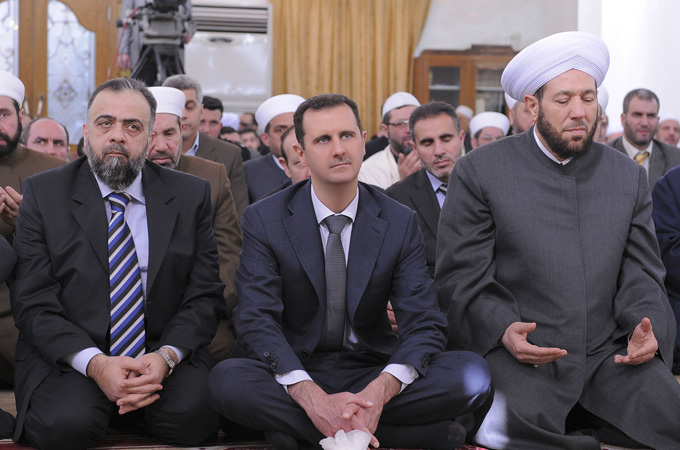
The decades-long split between liberal and conservative Catholics may be giving way to a stronger division between Catholic laity and their bishops in the wake of reports that members of the hierarchy covered up for priests and fellow bishops engaging in sexual abuse, writes John Allen on the Catholic website Crux (September 30). He asks: […]