








Asian Pacific American conservative Christians are playing an important mediating role between liberal and conservative Americans given that they hold views found in both camps and are increasingly engaging in political and civic life, write Joseph Yi and Joe Phillips in the social science magazine Society (online in January). The way in which conservative Asian Pacific Americans (APAs) interact with “both highly-educated progressives and less-educated conservatives…[gives] them a ‘foot in each camp’ when the political system is experiencing unusual polarization.” The authors cite research showing that conservative Christian APAs tend to hold pro-life and anti-gay marriage positions while supporting immigrant rights and anti-nativist positions. They point to the 2018 midterm elections, where Young Kim, a Korean American Republican candidate, ran a campaign where she distanced herself from some of President Trump’s rhetoric while agreeing on other positions, opposing California’s “sanctuary” policies, for example, but criticizing the federal government’s separation of migrant families at the border. She embraced the traditional Republican position on lowering regulations on businesses and described herself as pro-life on abortion and as supporting traditional marriage. Other APA conservative Christian political leaders who often eschew Trump’s nationalist rhetoric are Philadelphia City Councilman David H. Oh and Orange County (CA) Supervisor Michelle Park Steel.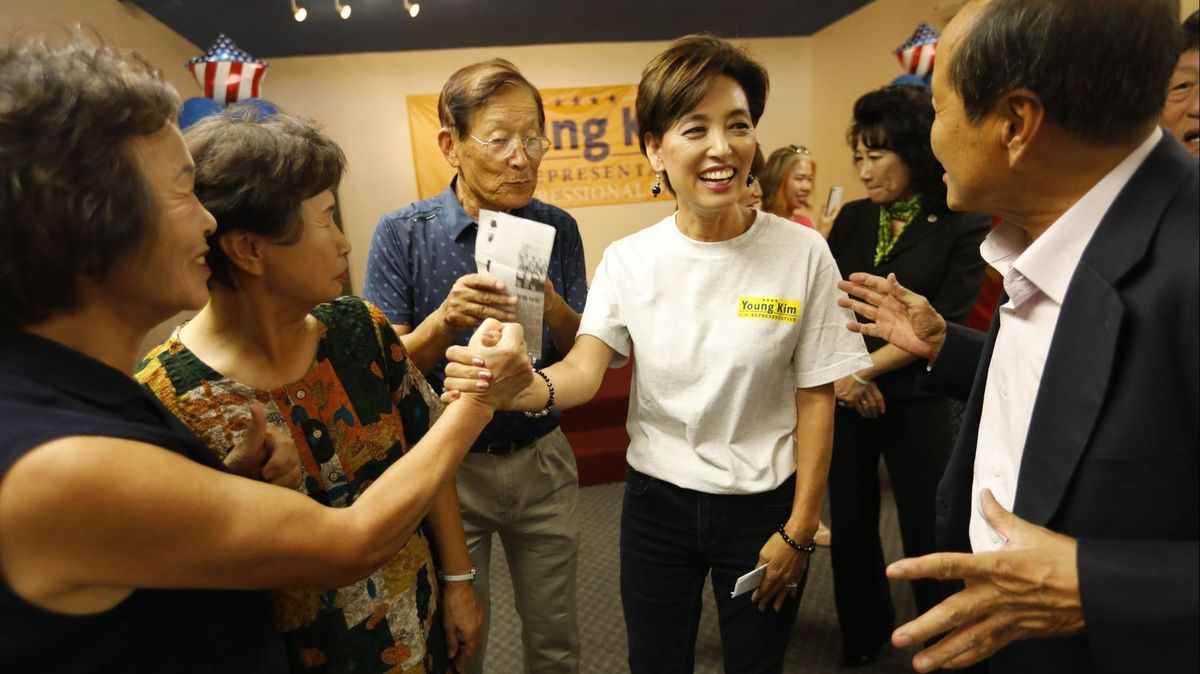
While the New Atheist movement, represented by such authors and spokesmen as Richard Dawkins and Sam Harris, has lost much of its public prominence, its contentious form of atheism is now more often directed at academic liberalism as well as Islam. In the magazine The Point (number 8), Jacob Hamburger writes that 2014 was the […]
There are signals of a new dynamism of the religious left in the U.S. for similar—if opposite—reasons to those that drove the Moral Majority on the right 40 years ago, writes Tom Gjelten in NPR News (Jan. 24). While they are still primarily “[keeping] their focus on protest rallies and social media campaigns” and remain […]
Changes to one of the special ceremonies held at the temples of the Church of Jesus Christ of Latter-day Saints (LDS) that extensively revised and eliminated references to traditional gender roles have been favorably received by church members and may result in more egalitarian attitudes toward gender roles among them, writes Benjamin Knoll in the […]
Interfaith dialogue at the international level is well-meaning, but it is unclear if it advances its stated goals of reducing tensions and conflicts, writes Jeffrey Haynes (London Metropolitan University) in an issue of The Review of Faith & International Affairs (Fall 2018) devoted to interfaith on the world stage. Indeed, as the editors of the […]
New data on white evangelical voting patterns and views during the 2018 midterm elections show about the same level of support for the presidency of Donald Trump as there was for candidate Trump in the 2016 presidential race. The blog Religion in Public (January 28) analyzed raw numbers recently released from a survey conducted by […]
A U.S.-style “culture war” seems unlikely in strongly secularized Dutch society, yet, with the help of American evangelical influence in the Netherlands’ small Bible Belt, this seems to be occurring, reports The Economist (January 9). In early January, 250 clerics, mainly from small conservative congregations, signed on to the Dutch version of the American-based Nashville […]
While the schools and educational movement inspired by Rudolf Steiner (1861–1925) first spread in German-speaking countries and then in other areas of the Western world, they are now present in other cultural surroundings as well. But the success of Steiner’s educational principles at the 100th anniversary of the first school’s founding may also lead to […]
Russia has actively been promoting a politically pacifist form of Islam, which is coinciding with a push by certain Arab countries to encourage Islamic moderation, writes Hassan Hassan in The Atlantic (January 5). Russia’s growing presence in the Middle East is usually viewed in strictly military and economic terms, but the country’s recent Islamic outreach […]
In what is reported to be the worst crackdown on religion since the country’s Cultural Revolution when Mao Zedong’s government vowed to eradicate religion, researchers say that the current drive in China is less about destroying Christianity than “bringing it to heel,” reports The Guardian newspaper (January 13). Fueled by government unease over the growing […]