








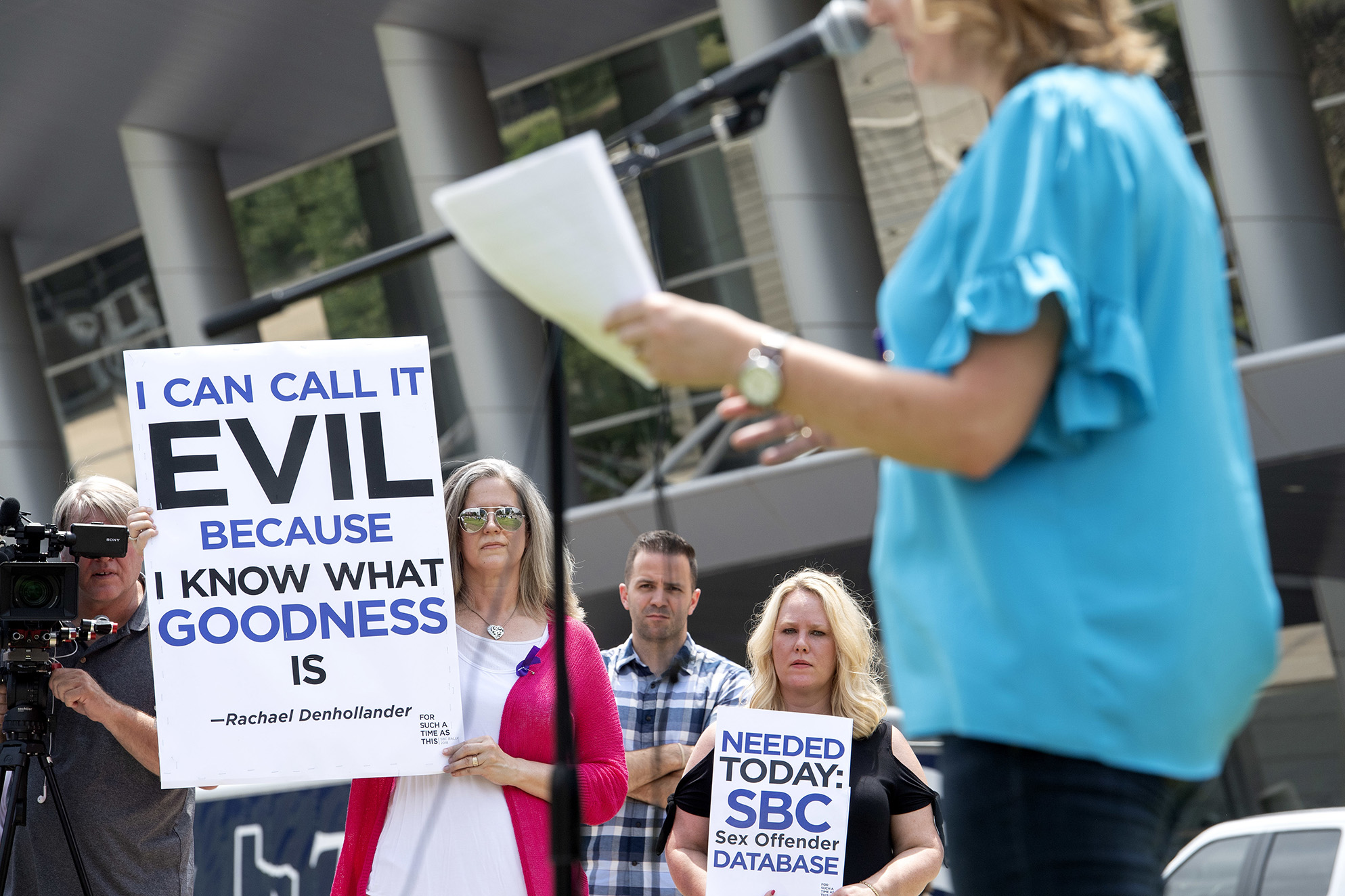
Widespread sexual abuse and the ability of abusive pastors and church leaders to move on to other congregations without censure or reproof in the Southern Baptist Convention (SBC) may also be a problem in other parts of the evangelical world, writes Dale Coulter in a blog at First Things magazine (February 17). The sex abuse crisis in the SBC, first reported in the Houston Chronicle (February 9), involves 380 church leaders and volunteers who have faced allegations of sexual abuse in the last 20 years. That report notes that local church autonomy in Baptist polity has permitted sexual abusers to circulate freely among churches. It also notes how Baptist ministers are easily ordained, since the practice of local ordination means that one can simply secure the endorsement of any congregation in good standing with the convention to be ordained, however small or remote it may be. Coulter adds that “the problem extends beyond the Southern Baptist Convention. As one denominational leader pointed out to me, ministers brought up on charges and dismissed from one denomination have simply gone to another for credentials. It’s not just laity who take advantage of evangelicalism’s big tent to move around.”
Such open networks allow for “ministerial movement from one part of evangelicalism to another [and] allow sexual abusers to escape judgment and start over. We don’t need a database of sexual abusers for the Southern Baptist Convention, we need it for evangelicalism as a whole. We need greater cooperation and transparency among evangelical churches and institutions on matters of church discipline so we can close these open networks.” The Chronicle report also added that denominations have begun to function like corporations, where they seek to protect the brand rather than the victims. In a similar way, Coulter argues that “[e]vangelicals have too often succumbed to victim shaming while simultaneously protecting their leaders[,]” as seen in the way conservative leader Paige Patterson’s abusive actions were denied and unquestioned because of his status, which took priority for his followers over church doctrine. Coulter concludes by focusing on the “bad theology” of the SBC and evangelical circles when it comes to extending “forgiveness over and over—even when patterns of sinful behavior have been established. The problem isn’t that they offer the mercy of Christ to persons caught in sinful patterns, but the idea that extending such forgiveness means the person should be allowed to remain in a position of authority.”
Conservative American Muslim leaders are more likely to be concerned about a creeping liberalization in their own ranks than about promoting Sharia law or some other political issue, writes Mustafa Akyol in the New York Times (February 18). He writes that there is concern over a new genre of Muslim bloggers and writers who are […]
When it comes to following gurus and spiritual masters, “[w]e have come to know too much to worship unconditionally,” says Bernhard Pörksen, a German media scholar and professor of media studies at the University of Tübingen, in an interview with Ursula Richard published in Buddhismus Aktuell, a German Buddhist quarterly (1st Quarter). He attributes this […]
“Deaths of despair” has become a popular term used in the last few years to account for the rising number of middle-aged white Americans who have been dying from suicide, drug overdoses and conditions related to alcoholism, but there have been few attempts to relate the phenomenon to religion. In a paper presented at the […]
The Russian Orthodox Church (ROC) is still in a period of “revival” marked by the rehabilitation of its position in society and rapid institutional expansion, but “signs of crisis are mounting rapidly,” writes Sergey Chapnin in IWM Post (Fall/Winter), a publication of the Vienna-based Institute for Human Sciences. Chapnin argues that the positive tendencies characterizing […]
With some 10,000 Chinese-owned firms operating in Africa and hundreds of thousands of Chinese workers currently staying in African countries, an unexpected consequence is that some of them return home after having converted to Christianity, reports journalist Christopher Rhodes in UnHerd (Feb. 13). Rhodes remarks that having to live in such a different culture can […]
Despite the attempt of a syncretistic movement known as Chrislam to bridge the differences between Islam and Christianity in sub-Saharan Africa, the public reception to such groups has been characterized more by sharp debate and hostility than interest and acceptance, according to a study by Corey L. Williams in the journal Studies in World Christianity […]
The Catholic Church in the Philippines is losing its once substantial civic role as it faces growing secularism and an aggressively anti-Catholic president, writes Adam Willis in Commonweal magazine (February 22). While Philippine President Rodrigo Duterte’s stringent war on drugs has brought the church into confrontation with the government over its abuses, it has not […]
RW has covered the rise and growth of FOCUS (Fellowship of Catholic University Students), and now Katherine Dugan fills out the picture considerably, showing how this group has fused evangelical practices and fervor with orthodox Catholicism in her new book Millennial Missionaries (Oxford University Press, $34.95). As its title implies, the book provides an in-depth […]
1) Ignatian Yoga is the latest attempt to graft Christian meanings and messages onto yoga practices, this time taking its inspiration from Jesuit contemplation and meditation. The practice is drawing enthusiastic crowds to retreats and workshops drawing on the public appeal of both yoga and Ignatian spirituality. It began in 2014 at Fordham University in […]