








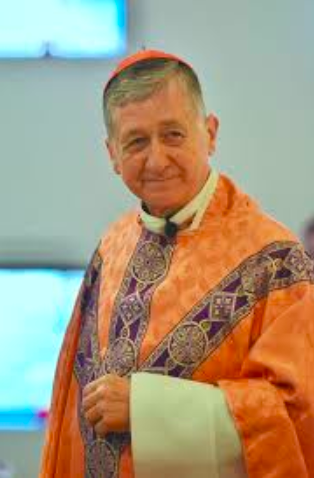
1) The recent appointment of Archbishop Ronald Hicks to the New York Archdiocese is one sign of the growing influence of the network based around Chicago’s progressive Cardinal Blase Cupich. When it comes to playing “kingmaker” in U.S. episcopal appointments, Chicago’s Cardinal Cupich is said to have few peers. Hicks, just appointed to the New York Archdiocese, is the fourth former deputy bishop of Cupich’s to be named to a major American see in just the past 13 months. The three other prelates are Archbishop Jeffrey Grob of Milwaukee, Archbishop Michael McGovern of Omaha, and Archbishop Robert Casey of Cincinnati, each of whom was installed as an archbishop in 2025. Cupich promoted each to a key archdiocesan-wide position after his 2015 arrival in Chicago, with the four prelates accounting for more than 12 percent of all U.S. Latin Rite archbishops, the upper echelon of church leadership in the country. Cupich is also “a longtime member of the Vatican’s Dicastery for Bishops and one of the most progressive prelates in the country, [underscoring] the considerable influence the Chicago cardinal has exerted on the U.S. episcopal landscape over the past decade,” according to Jonathan Liedl. Cupich’s close rapport with the late Pope Francis made him his eyes and ears in the U.S.
The close relationship with Francis allowed Cupich to influence appointments beyond those involving his former subordinates, such as Cardinal Robert McElroy’s placement in the Archdiocese of Washington after a Cardinal Cupich-led lobbying effort. The Vatican has also drawn heavily from Cupich’s many auxiliary bishops (more than archdiocese) when looking to fill diocesan vacancies. In fact, Chicago auxiliaries accounted for nearly 50 percent of the 13 new bishops introduced at the recent bishops meeting in Baltimore. While there is no sign that Cupich’s episcopal candidates all reflect his progressive views, they tend not to be known as “culture warriors,” those who take public stands against progressive-backed departures from Christian morality in the wider society and generate “negative press” for the church. For instance, the “minor exorcism” performed by Springfield’s Bishop Thomas Paprocki in 2013 in response to Illinois legalizing so-called “gay marriage” was the kind of action that would “not [be] looked upon favorably” by Cardinal Cupich and would get a candidate blocked from advancement. Cupich has played an outsized role in shaping the present-day American hierarchy, a reality that will come into even clearer focus with his former vicar general now archbishop of the influential New York archdiocese. (Source: National Catholic Register, February 3)
2) Project Blitz, an initiative created by the Congressional Prayer Caucus Foundation, Wallbuilders, and the National Legal Foundation, is one of the more influential efforts of the ambiguous Christian nationalist movement. While definitions and manifestations of Christian nationalism are disputed by both proponents and critics, the project translates admittedly Christian nationalist values and ideas into concrete legislative action at the state level. Modeled on the American Legislative Exchange Council (ALEC), Project Blitz produces model bills for sympathetic state legislators to introduce across the country, promoting measures such as displaying “In God We Trust” in public buildings, recognizing Christian Heritage Week, certifying student prayer rights, and establishing policies favoring heterosexual marriage and birth gender.
Between 2019 and 2021, Project Blitz introduced 241 bills in state legislatures, with Texas leading at 23 and 16 states seeing none at all. States with a stronger historical Christian-right presence saw more bills, independent of Republican legislative majorities or Trump’s 2016 vote share. Additionally, the proportion of evangelicals in a state positively predicts bill introductions, highlighting their role in fostering receptivity. Political scientist Kimbely Conger writes that a “Christian nationalist movement with a historical pedigree has a much stronger chance to both pass and implement its policy goals because the fields were plowed and ready from earlier activities of the Christian Right.” She argues that a strategy aiming at a change of laws at the state level seeks to “impact the foundation of how we approach democracy and its relationship to religion.” (Source: Politics and Religion, online January 14)