







Pope Leo XIV has provided clues to how he governs the Vatican and Curia and manages international affairs, with his style differing in significant ways from Pope Francis, according to two reports. Commonweal magazine (January 8) reports that some of Leo’s recent appointments are reversing some of Francis’s reforms and applying American management practices to the Vatican. His appointment of the new president of the Pontifical Commission for the Protection of Minors (PCPM), Msgr. Thibault Verny, is seen as correcting the problems of the PCPM—especially the lack of clarity on its mission, writes Massimo Faggioli. In September, Leo appointed a new prefect of the Dicastery for Bishops: Archbishop Filippo Iannone from Naples, a canon lawyer who was deeply involved in expanding the procedures for investigating abuse. Leo’s most visible change has been his strengthening of the Curia, trying to improve its morale, in contrast to Francis’s critical stance towards this governing body. He is more concerned about the institutional mission of the Vatican dicasteries. “This reflects Leo’s different understanding of the role of the Roman Curia as part of a Church theology that is more institutional, less movement-like, and less personal,” Faggioli writes.
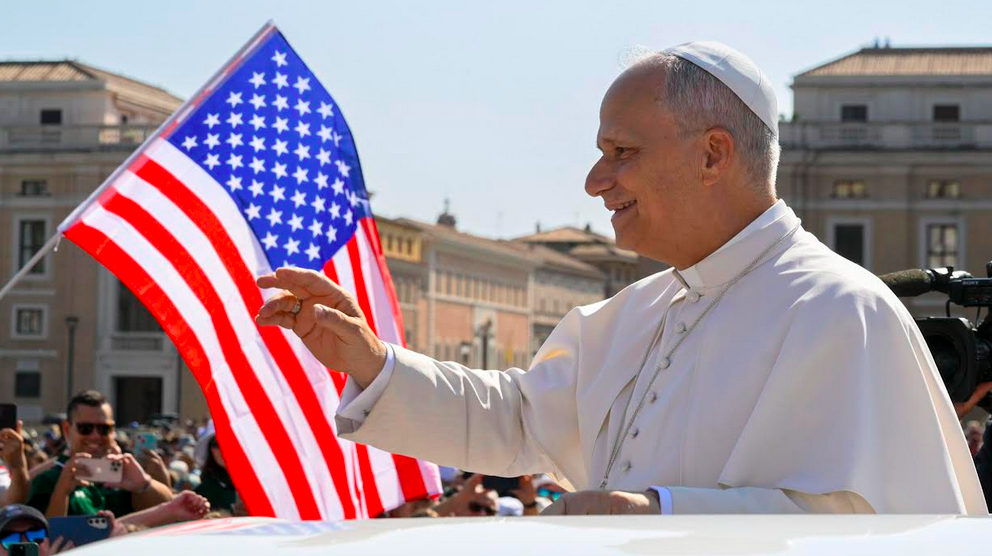
He adds that “Leo has introduced, in his gentle style, a different way to govern the Vatican—one that is more mindful of the need to work together with all those in the hierarchy. It may signal the beginning of what could be a profound change in the way the Curia works.” Faggioli cites political scientist Thomas Reese who said, “It is time for American management practices in the Vatican. If an American pope cannot do that, we will have more scandals in the future.” Pope Leo also appears to be departing from Francis’s more activist style when it comes to international peacebuilding and domestic issues, according to the online magazine Arc (January 13). “Pope Leo seems to be extending his consensus-based approach to intra-Catholic disputes into the realm of international relations. He will make the Roman Catholic Church a voice for peace but, unlike his predecessor, will leave it to others to figure out how to achieve that peace. Pope Leo likely hopes this will allow him to steer the church in a peaceful direction without upsetting potential critics. Based on early pushback to his efforts, however, Pope Leo may have to decide between Pope Francis’s forceful peacebuilding and a more conservative retrenchment,” Peter Henne writes.
He cites Leo’s recent statement in response to the U.S. military intervention in Venezuela, which “likely left both its supporters and opponents unsatisfied,” calling for the “good of the beloved Venezuelan people,” “the sovereignty of the country,” and “special attention to the poorest.” While saying that the church desired peace, he neither supported an extra-legal strike by the U.S. nor issued denunciations. Henne observes that Leo has extended his mixed stance on intra-Catholic issues, such as his siding with conservatives on holding the Latin Mass while continuing Francis’s interfaith and ecumenical work, to international conflict. Back in May, the pope offered to “host or facilitate peace talks among countries at war,” while in October he said it wasn’t “very realistic” for the pontiff to mediate conflicts. He was likewise circumspect when asked to address Israeli settler violence in the West Bank, calling for those involved to “work together for justice for all peoples.” Henne speculates that the logic of Leo’s approach “subtly builds on Francis’s legacy while redirecting it. In place of Francis’s activism, Leo’s paradigm of engagement seems to be that of building consensus.” Leo’s initiatives have not sought to resolve still present internal Catholic or ecumenical conflicts and tensions. “And I suspect Pope Leo is okay with that. Rather than trying to force a resolution of the underlying conflict or provide a solution, he is creating the conditions for a consensus to emerge, just as he did during the conclave. This, I suspect, is the logic undergirding his peacebuilding.”
(Commonweal, https://www.commonwealmagazine.org/curia-massimo-leo-pope-vatican-faggioli-church-francis; Arc, https://arcmag.org/a-new-direction-in-vatican-diplomacy/)