








Italian Muslims are taking a unique and more activist path compared to Islam in other European countries, alarming populist and conservative groups and political leaders, but also carrying tendencies that may avoid the confrontations and tensions experienced in other parts of Europe. Writing in the European Conservative magazine (December 10), Javier Villamor reports that “In several European countries, a political trend that until now remained discreet is becoming increasingly visible: the deliberate construction of Islamist lobbies inspired by models already employed by other pressure groups.” He cites the recent example of Italian activist and influencer Ibrahim Youssef, who holds a PhD in political science and philosophy and has argued that the Muslim community must prepare to play a significant political role in the medium term. Representing 4.6 percent of the Italian population in 2022, Muslims could reach nearly 10 percent by 2050. Youssef claims that this demographic trend “opens the door to growing electoral influence if it translates into cohesive political participation. His view is that a unified voting bloc could force major parties, especially conservative ones, to rethink their discourse on immigration and integration to maintain their chances of governing. The argument is presented not as an ideological project, but as an electoral calculation based on figures,” Villamor writes.
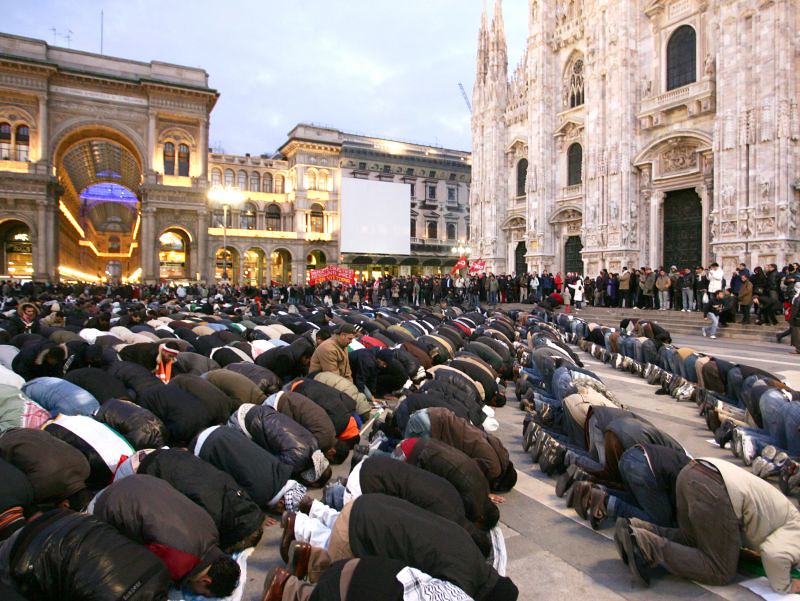
Youssef proposes that the Muslim community should “emulate the Zionist lobby” for its long-term vision. This means the Muslim community should support any Muslim candidate who enters politics, “reinforcing internal cohesion mechanisms that allow negotiation with traditional parties.” This strategy seeks to advance step by step within institutions, “even if a Muslim representative cannot fully defend a religious program,” Villamor adds. Youssef also highlights the importance of cultural influence, using the LGBT movement as an example. This view that the Muslim community must prioritize its cultural presence before aspiring to broader institutional weight is aligned with the strategy of international Islamist organizations, such as the Muslim Brotherhood, and has alarmed the Italian right. Italian Deputy Prime Minister and populist Lega president Matteo Salvini threatened to suspend “all permits to build mosques and Islamic centers [in Italy] until they [Islamic communities] also sign an accord with the Italian state in which they pledge to respect our laws and traditions.”
In an article in the journal Contemporary Islam (online in November), Stefano Allievi (University of Padua) writes that any such accord between Islam and the Italian state is a long way off. The conservative government actively opposes a legal recognition of Islam that it has given to other minority religions. Allievi agrees that a second generation of Muslims has emerged and “new social actors” are introducing greater activism in the “production of Islamic culture.” Islam in Italy is unique in that is based more in smaller cities and is more local than national, avoiding much of the sharper confrontations involving Muslims and nationalists throughout Europe. And Italy not elaborating a plan to integrate Islam, neither embracing the French model of secularism nor the Anglo-Saxon style of multiculturalism, could prove to be a “competitive advantage, allowing the country to avoid the extremes…of either.”
(European Conservative, https://europeanconservative.com/articles/news/italian-islamist-strategy-if-we-vote-our-own-well-control-politics/; Contemporary Islam, https://link.springer.com/journal/11562)